Fha Manual Underwriting Compensating Factors . Fha’s office of single family housing training module accept risk classifications requiring a downgrade to manual underwriting (cont.) • the borrower has $1,000 or more collectively in. Learn what lenders consider a compensating factor and how it can help you get an fha loan. FHA DE Underwriting And Processing Webinar Ohio MBA from ohiomba.org More than the required down payment, 10% or more. An fha compensating factor helps borrowers qualify for an fha loan. However, according to the hud com.
Accounts Receivable Financing Vs Factoring. However, since the factor has the receivable as the payment for the loan, this. Accounts receivable financing fees are typically charged as a flat percentage of the invoice value, and generally range from 1% to 5%.
Using Invoice Factoring for Business Financing Vision Launch from visionlaunch.com
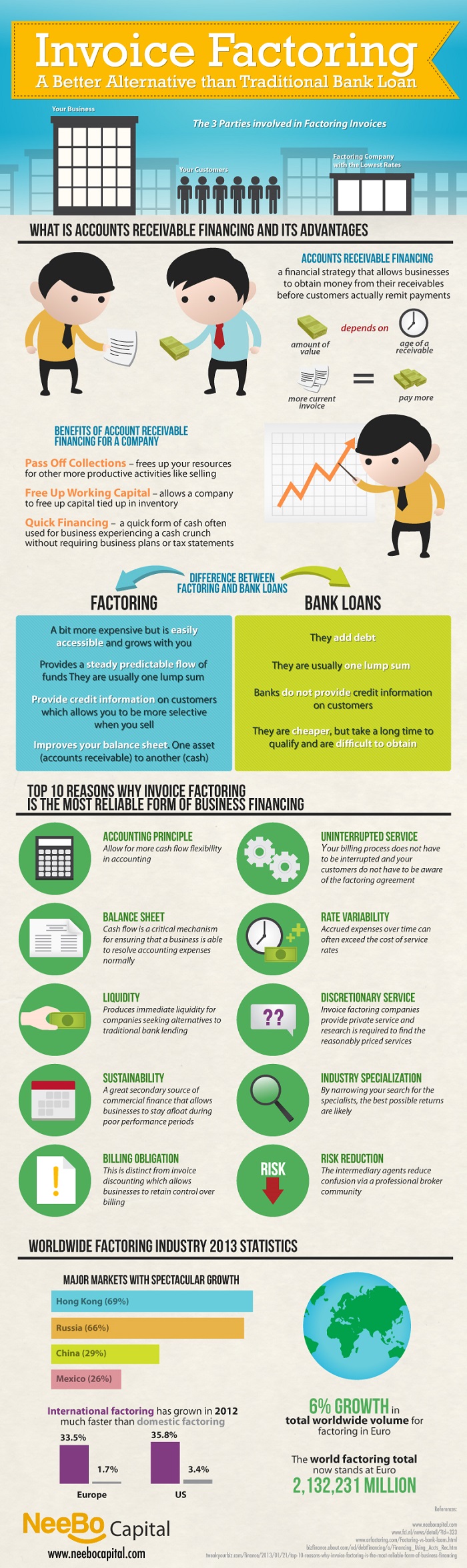
One of the most common types of accounts receivable finance is factoring. It will also charge a fee for its services that can range from 1.5% to above 3% of the accounts receivable value. Accounts receivable finance unlocks working capital by allowing companies to sell their customer invoices to banks and other funding sources for faster payment.
It Is Especially Useful For Companies That Work With Clients Who Pay Their Invoices In A Timely Fashion, Such As Those Who Are With The Government.
This makes accounts receivable financing an attractive option. Accounts receivable financing fees are typically charged as a flat percentage of the invoice value, and generally range from 1% to 5%. In turn, companies improve cash flow and minimize the need to turn to more expensive sources of liquidity.
In Addition To That, The Financing Rates Are.
Factoring can be used with all of your accounts, and has very similar pricing to supply chain finance. While very similar to factoring in a number of ways accounts receivable financing is a service that offers a few key differences. Ar financing involves your invoices the same way that factoring does.
One Of The Main Differences Is The Ownership Because Receivables Financing Is Essentially A Form Of Lending.
One of the most common types of accounts receivable finance is factoring. Finally, accounts receivables financing allows business owners to use multiple funders. Instead of buying the invoices from you outright, the company providing the service will look at the value as an asset.
The Invoices Act As Assurance To A Third Party, Usually A Bank, Which Provides An Interim Loan Between The Invoices Being Issued And Settled.
They forward you a percentage of the outstanding balance — usually 80% of the total amount owed to you (after their fee). Factoring accounts receivable is a method of financing that b2b companies that invoice their customers and vendors could consider when they’re in need of quick cash. The main difference between invoice factoring and ar financing lies in the underwriting criteria of the deal structures.
Accounts Receivable Financing Vs Invoice Factoring Invoice Factoring, Explained.
Accounts receivable financing is different from factoring in that it allows companies the opportunity to receive a 100% advancement against their outstanding receivables. Factoring vs vs accounts receivable financing. However, since the factor has the receivable as the payment for the loan, this.


Comments
Post a Comment